


- Arora Eye Centre
- Posted on
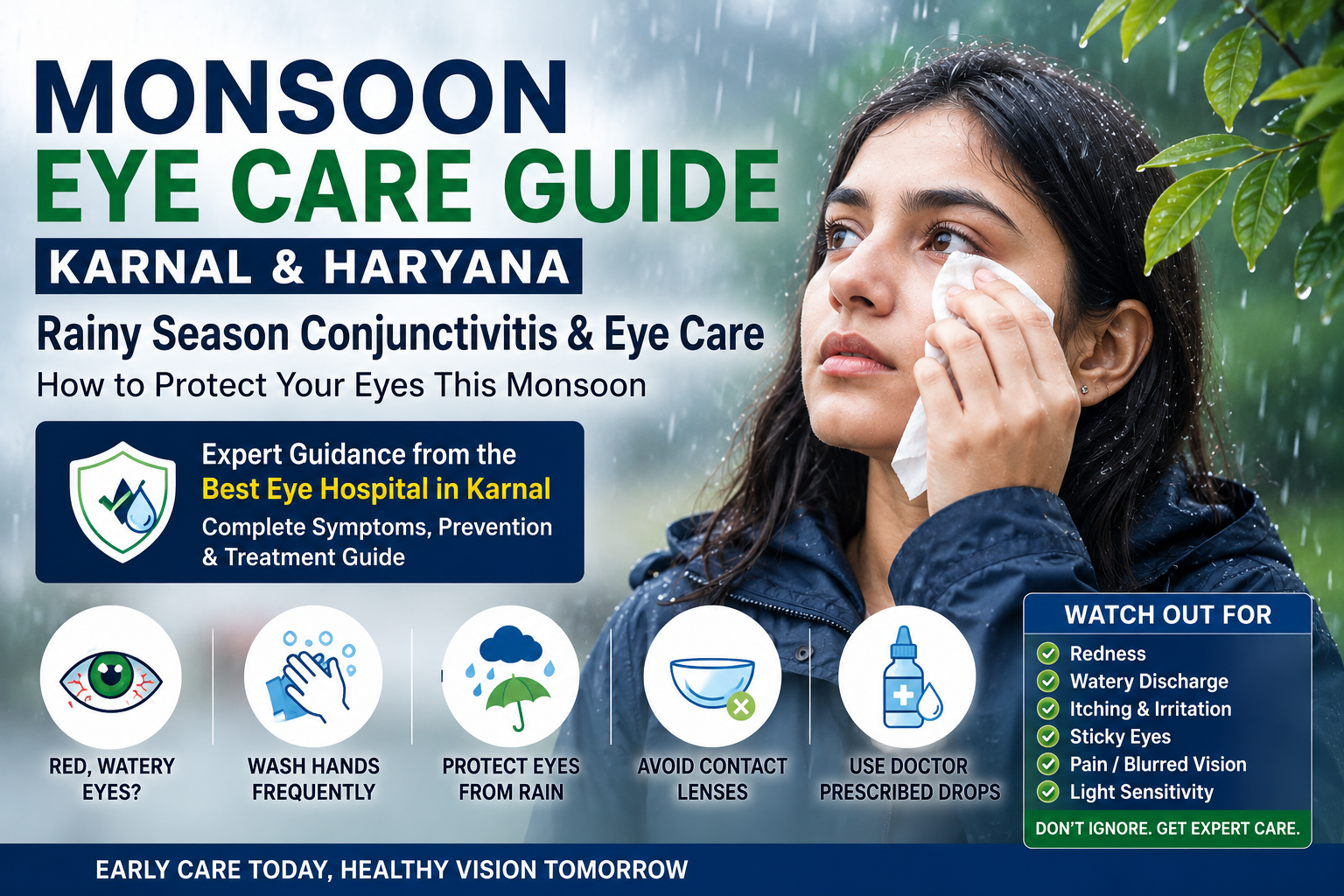
MONSOON EYE CARE GUIDE — KARNAL & HARYANA
Rainy Season Conjunctivitis & Eye Care
How to Protect Your Eyes This Monsoon
Expert Guidance from the Best Eye Hospital in Karnal — Arora Eye & LASIK Laser Centre
Rainy Season Conjunctivitis & Eye Care in Karnal — Complete Guide
Every monsoon, as the skies over Haryana open up and the heat finally breaks, something else arrives with the rains — a sharp rise in eye infections, conjunctivitis outbreaks, corneal inflammation, and allergic eye disease. Across Karnal, Panipat, Kurukshetra, and the surrounding region, the weeks between July and September bring the rains that farmers wait for and the eye infections that ophthalmologists brace for.
The reason is straightforward. Monsoon conditions — high humidity, airborne allergens, waterlogged streets, contaminated surface water, and crowded public spaces — create the perfect conditions for the viruses and bacteria responsible for eye infections to thrive and spread. Viral conjunctivitis, in particular, becomes epidemic-level during peak monsoon months across northern India, with outbreaks rapidly moving through schools, offices, and households.
At Arora Eye & LASIK Laser Centre — the best eye hospital in Karnal — our team of specialist ophthalmologists sees a measurable increase in conjunctivitis and monsoon-related eye conditions every year. This guide is our clinical contribution to helping the people of Karnal and Haryana protect their eyes this season: what infections to watch for, how they spread, what symptoms require urgent care, and what you can do right now to dramatically reduce your risk. If you need to see a best eye doctor in Karnal, we are at Sector 7, Urban Estate, Karnal — and available 24 hours for emergencies.
| 20+Years Eye Care in Karnal | 12+Super Specialist Doctors | 5,00,000+Eye Surgeries Performed | 24/7Emergency Eye Care |
1. Why Monsoon Season Is the Highest-Risk Period for Eye Infections
The relationship between the rainy season and eye infections is not coincidental — it is environmental. Several simultaneous climatic and behavioural factors converge during monsoon to elevate infection risk to its annual peak.
Elevated Humidity — The Ideal Bacterial and Viral Environment
High relative humidity, which characterises Haryana's monsoon months of July through September, accelerates the replication and survival of the pathogens responsible for conjunctivitis. Adenoviruses — the most common viral cause of epidemic conjunctivitis (pink eye) in India — survive longer on surfaces and in the environment in humid conditions. Bacterial pathogens including Staphylococcus aureus, Streptococcus pneumoniae, and Haemophilus influenzae similarly proliferate in warm, moist environments.
Contaminated Rainwater and Stagnant Water
Rainwater that collects in drains, roads, and low-lying areas in urban Karnal rapidly becomes contaminated with bacteria, mould spores, and chemical irritants. Direct contact of this water with the eye — through splashing while driving, walking, or in flooded areas — introduces these pathogens directly to the conjunctival surface. Two-wheeler commuters face heightened risk from rainwater and debris entering the eye during monsoon travel.
Allergen Surge — Pollen, Mould, and Fungal Spores
Monsoon conditions trigger a significant rise in airborne allergens — including fungal spores (from mould on damp surfaces), freshly pollinating vegetation, and dust particles re-aerosolised by rain. These allergens trigger allergic conjunctivitis in susceptible individuals, causing intense itching, watery discharge, and eyelid swelling. Pre-existing seasonal allergy sufferers are at highest risk.
Contact Lens Wearers — A Special Monsoon Risk
Contact lens wear during monsoon significantly elevates the risk of keratitis — inflammation of the cornea — due to the increased presence of waterborne bacteria and Acanthamoeba organisms in monsoon-season water. Contact lens wearers who wear their lenses in rain, or who shower or rinse their lenses in tap water, expose their corneas to infection risk that is genuinely sight-threatening if not treated promptly.
2. Monsoon Eye Infections — Types, Symptoms & Warning Signs
Understanding the specific type of eye infection is clinically important — different infections require different treatments, and confusing them leads to treatment failure or worsening. The following covers the five most prevalent monsoon eye conditions seen at Arora Eye & LASIK Laser Centre.
| Type | Primary Symptoms | Discharge | Contagious? |
|---|---|---|---|
| Viral Conjunctivitis | Intense redness, watery discharge, burning, light sensitivity | Watery / clear | Highly contagious — 10–14 days |
| Bacterial Conjunctivitis | Redness, eyelid swelling, mucopurulent discharge, lids stuck on waking | Thick yellow/green pus | Contagious — 24–48 hrs on antibiotics |
| Allergic Conjunctivitis | Severe itching, bilateral redness, tearing, puffy eyelids | Watery / stringy mucus | Not contagious |
| Keratitis (Corneal) | Eye pain, blurred vision, light sensitivity, foreign body sensation | Variable | Depends on cause |
| Stye (Hordeolum) | Painful red lump on eyelid margin, localised swelling | None / minimal | Low risk |
A. Viral Conjunctivitis (Epidemic Pink Eye / Eye Flu)
Viral conjunctivitis is the most common monsoon eye condition in India, and the most contagious. In northern India, it is often called 'eye flu' — a colloquial term reflecting its rapid, epidemic spread through families, schools, and workplaces during July–September. The responsible pathogen is most commonly Adenovirus, with various strains causing either pharyngoconjunctival fever (associated with sore throat, fever, and swollen lymph nodes) or epidemic keratoconjunctivitis, which can produce corneal involvement and temporary vision blurring.
Viral conjunctivitis typically begins in one eye, spreading to the other within 24–48 hours. Eyelids are stuck together on waking due to serous discharge. The eyes are intensely red, watery, and light-sensitive. There is no specific antiviral treatment — management is supportive, with lubricating drops, cold compresses, and strict hygiene to prevent spread. The infection is self-limiting in approximately 10–14 days, but professional assessment is important to rule out corneal involvement.
B. Bacterial Conjunctivitis
Bacterial conjunctivitis is characterised by the thick, mucopurulent (yellow-green) discharge that causes the eyelids to stick closed overnight. Common causative organisms during monsoon include Staphylococcus aureus and Streptococcus pneumoniae. Unlike viral conjunctivitis, bacterial conjunctivitis responds to topical antibiotic eye drops — making accurate diagnosis and appropriate prescription critical. Patients who self-treat viral conjunctivitis with antibiotic drops gain no clinical benefit; patients who delay treating bacterial conjunctivitis risk worsening infection.
C. Allergic Conjunctivitis
Monsoon allergens — particularly mould spores and pollen from freshly growing vegetation — trigger allergic conjunctivitis in susceptible individuals. This presents with intense bilateral itching (the dominant symptom that distinguishes it from infectious types), watery discharge, and characteristically puffy, swollen eyelids. Allergic conjunctivitis is not contagious and does not respond to antibiotic drops — it requires topical antihistamine and mast cell stabiliser therapy, sometimes supplemented by short-course topical steroids prescribed by an ophthalmologist.
D. Keratitis — The Monsoon Emergency
Keratitis — inflammation of the cornea — is the most serious monsoon eye condition and requires immediate attention at the best eye hospital in Karnal or any well-equipped ophthalmology centre. It can be caused by bacteria, viruses, fungi (increasingly common with water exposure and soil contact), or the Acanthamoeba organism (particularly dangerous for contact lens wearers exposed to contaminated water). Symptoms include severe eye pain, photophobia (light sensitivity), significant reduction in vision, and excessive tearing. Untreated keratitis can progress to corneal ulceration, scarring, and permanent vision loss within days.
E. Stye (Hordeolum)
A stye is a painful, localised swelling on the eyelid margin caused by bacterial infection (most commonly Staphylococcus aureus) of the eyelash follicles or the meibomian oil glands. During monsoon, dust particles and bacteria carried in rain and humid air increase the rate of stye formation, particularly in individuals who touch or rub their eyes frequently. Warm compresses applied for 10–15 minutes, four times daily, promote resolution of early styes. Styes that do not resolve within five to seven days, that grow rapidly, or that involve significant eyelid swelling require clinical drainage and antibiotic therapy — not squeezing at home, which pushes the infection deeper.
3. How Conjunctivitis Spreads — and How to Break the Chain
During the 2024 monsoon conjunctivitis outbreak in North Central India, a multicentric study published in PubMed documented 920 patients across ophthalmic centres, with hospital staff (43%) and school-going children (31%) being the most affected groups — reflecting the primary transmission mechanism: direct and indirect contact in close-proximity environments.
Primary Transmission Routes
- Direct contact with infected eye discharge — touching or rubbing an infected eye, then touching surfaces or another person's face
- Indirect contact via contaminated surfaces — door handles, taps, shared towels, pillow cases, mobile phones, and computer keyboards touched by an infected person
- Shared personal items — towels, handkerchiefs, eye drops, and eye makeup are all established transmission vehicles for conjunctivitis
- Respiratory droplets — some adenoviral strains spread via respiratory secretions in addition to ocular discharge, explaining rapid household spread
- Contaminated water contact — rainwater, flood water, and swimming pools during monsoon season
Breaking the Chain of Transmission
- Wash hands thoroughly with soap and water for at least 20 seconds before and after any contact with the eye or face area
- Do not share towels, pillowcases, handkerchiefs, eye drops, or cosmetics — ever, but especially during monsoon
- Avoid touching or rubbing your eyes — this is both a spreading mechanism and a risk factor for introducing new pathogens
- Infected individuals should ideally avoid school or workplace for the duration of active infection to prevent epidemic spread
- Change pillowcases and towels daily if you or a household member is infected
- Disinfect commonly touched surfaces — including mobile phones — during an outbreak in the household
4. Complete Monsoon Eye Care Guide — 10 Clinical Recommendations
The following guidance reflects the clinical recommendations of the ophthalmology team at Arora Eye & LASIK Laser Centre, Karnal — drawn from two decades of treating monsoon eye conditions in Haryana.
- Protect Eyes From Direct Rainwater Contact — During monsoon, each rain event deposits bacteria, fungal spores, allergens, and chemical irritants directly onto the ocular surface. If rainwater enters your eyes, rinse immediately with clean, distilled, or cooled boiled water — not tap water, which may itself carry contaminants. Carry a small bottle of sterile saline for this purpose when commuting.
- Handwashing — The Most Effective Prevention — Both bacteria and viruses responsible for conjunctivitis survive on hands for hours. Regular hand hygiene — particularly before touching the face, eye, or glasses — is the single most effective individual-level prevention measure for monsoon eye infections.
- Contact Lens Wearers — Heightened Vigilance Required — Contact lens wearers should consider switching to glasses during peak monsoon months. If lens wear is unavoidable, hands must be washed and dried before lens handling, lenses must never be rinsed in tap water, and lenses must be removed and cleaned immediately if rainwater contacts the eye. Any eye redness or discomfort in a contact lens wearer during monsoon is an indication to remove lenses immediately and seek same-day review.
- Minimise Eye Makeup During Monsoon — Reducing or eliminating eye makeup during monsoon significantly reduces infection risk. Mascara wands, eyeliner pencils, and kajal that have been used once are colonised with bacteria — and repeated use during humid monsoon conditions increases ocular surface exposure. If eye makeup is worn, it must be fully removed with a clean, dedicated remover before sleep.
- Wear Protective Eyewear While Commuting — Wraparound or UV-protective spectacles worn while commuting on two-wheelers protect against rainwater, dust, allergen exposure, and windborne debris — all elevated during monsoon. This is particularly important for contact lens wearers and individuals with pre-existing dry eye or allergic conjunctivitis.
- Manage Allergies Proactively — Allergy sufferers should begin topical antihistamine eye drops (as prescribed) proactively — before peak allergy season, not after symptoms have become severe. Nasal antihistamines also reduce ocular allergic symptoms by decreasing systemic allergic load. Consult your ophthalmologist at Arora Eye Centre for a monsoon allergy management plan.
- Maintain Ocular Surface Lubrication — Patients with pre-existing dry eye disease — a condition in which the ocular surface is already compromised — experience significant worsening during monsoon due to allergen exposure, wind, and the paradoxical drying effect of increased environmental humidity on eyes exposed to air conditioning. Preservative-free artificial tear drops used four to six times daily during monsoon provide meaningful symptomatic relief and reduce infection susceptibility.
- Never Share Eye Drops — NEVER use another person's eye drops during monsoon — this is a direct transmission route for conjunctivitis. Even within a household, eye drops must be used individually. Once a bottle has been touched to an infected eye, it is contaminated and should be discarded.
- Avoid Steroid Eye Drops Without Prescription — Over-the-counter eye drops that contain steroids — identifiable by ingredients such as dexamethasone, betamethasone, or prednisolone in the label — are categorically unsafe to self-administer without ophthalmological assessment. Steroids suppress the immune response that the eye needs to fight infection. Steroid drops applied to an undiagnosed fungal keratitis or herpetic eye disease are documented causes of severe, rapid visual deterioration. All eye drops during monsoon should be prescribed by an eye doctor.
- Nutrition and Hydration for Eye Health — Consuming adequate water (2–3 litres daily), Vitamin A-rich foods (carrots, leafy greens, sweet potato), and Vitamin C (citrus fruits, amla) supports tear film health and mucosal immunity. A well-hydrated, nutritionally supported ocular surface is more resilient to infectious challenge.
5. When to See an Eye Doctor — Symptoms That Cannot Wait
One of the most common and clinically consequential errors patients make during monsoon is delaying professional consultation — relying on home remedies, over-the-counter drops, or 'waiting it out.' While most viral conjunctivitis does resolve without specific treatment, the inability to distinguish between viral conjunctivitis and keratitis, bacterial infection, or other sight-threatening conditions is precisely why self-treatment is dangerous.
- Significant pain inside or around the eye — not just surface irritation
- Blurred vision or reduced visual acuity in either eye
- Marked sensitivity to light (photophobia) that forces eye closure
- White or grey opacity developing on the cornea (the clear front of the eye)
- Eyelid swelling that is rapidly worsening or accompanied by fever
- Swelling near the inner corner of the eye — may indicate dacryocystitis (tear sac infection)
- Eye redness that does not improve after 5–7 days
- You wear contact lenses and develop ANY redness, pain, or discharge
- A young child with any of the above symptoms — children cannot reliably report vision change
- Chemical, cleaning fluid, or any unknown substance in the eye — rinse immediately with water and attend emergency
6. Treatment of Monsoon Eye Infections at Arora Eye Centre
At Arora Eye & LASIK Laser Centre — the top eye hospital in Karnal — monsoon eye infections are assessed and managed through a structured clinical protocol that ensures accurate diagnosis before any treatment is prescribed. Patients who attend the centre with monsoon eye complaints receive a comprehensive slit-lamp examination, ocular surface assessment, and — where clinically indicated — corneal scraping for microbiological culture to identify the causative organism and guide targeted antibiotic or antifungal therapy.
Viral Conjunctivitis
Management is supportive. Preservative-free lubricating drops provide symptomatic relief by flushing the ocular surface. Cold compresses on closed eyelids reduce swelling and discomfort. Strict contact precautions are implemented. Topical antihistamines may be prescribed where allergic overlay is suspected. Antiviral drops (topical ganciclovir) are used in selected cases of herpetic conjunctivitis. The infection resolves within 10–14 days in most cases.
Bacterial Conjunctivitis
Topical antibiotic eye drops — selected on the basis of the clinical presentation and, where indicated, microbiological sensitivity — are the mainstay of treatment. Commonly prescribed agents include moxifloxacin, tobramycin, or ciprofloxacin drops. Patients typically note improvement within 24–48 hours of initiating appropriate antibiotic therapy. Completing the full prescribed course is essential even after symptom resolution.
Allergic Conjunctivitis
Treatment combines topical antihistamine / mast cell stabiliser drops (olopatadine, ketotifen, or similar), cold compresses, and avoidance of identified allergen triggers. In moderate to severe allergic conjunctivitis, short-course topical corticosteroid therapy — supervised closely by the prescribing ophthalmologist — may be indicated. Systemic oral antihistamines provide additional relief in patients with concurrent nasal allergic symptoms.
Keratitis
Keratitis management is an ophthalmological emergency and is managed within the centre by the clinical team. Bacterial keratitis is treated with intensive topical broad-spectrum fluoroquinolone antibiotics (initially every hour, around the clock, for severe cases). Fungal keratitis — increasingly encountered after monsoon vegetation and water exposure — requires topical antifungal therapy (natamycin, voriconazole) continued for weeks. Acanthamoeba keratitis in contact lens wearers requires specialised combination therapy. All keratitis cases require daily to alternate-day clinical review to monitor corneal healing and adjust treatment.
Book a consultation for any monsoon eye concern: aroraeyecentre.in/book-appointment/
7. About Arora Eye & LASIK Laser Centre — Best Eye Hospital in Karnal and Haryana
Arora Eye & LASIK Laser Centre has served the people of Karnal and Haryana for over 20 years, establishing itself as the best eye hospital in Karnal across every dimension of eye care — from routine monsoon eye infections and spectacle prescriptions to the most advanced LASIK surgery, blade-free cataract procedures, retinal interventions, and corneal transplantation. For patients searching for an eye hospital near me in Karnal, Panipat, Kurukshetra, Kaithal, or Ambala, the centre at Sector 7, Urban Estate, Karnal is the closest, most technologically equipped, and most experienced ophthalmic institution in the region.
Our Team of Eye Specialists in Karnal
The centre is staffed by 12+ super-specialist ophthalmologists covering all subspecialties of eye care. The confirmed medical team includes:
| Doctor | Specialisation | Profile Link |
|---|---|---|
| Dr. Sanjeev Arora | Founder | LASIK, Refractive Surgery, Cataract | aroraeyecentre.in/team/dr-sanjeev-arora-eye-doctor-in-karnal/ |
| Dr. Adviti Arora | Ophthalmologist | Comprehensive Eye Care | aroraeyecentre.in/team/dr-adviti-arora-best-eye-doctor-in-karnal-arora-eye-lasik-laser-centre/ |
| Dr. Harshinder Singh | Paediatric Ophthalmology, Squint | aroraeyecentre.in/team/dr-harshinder-singh/ |
| Dr. Rajneesh Dhiman | Ophthalmologist | General & Surgical Eye Care | aroraeyecentre.in/eye-specialists-doctors-in-karnal/ |
| Dr. Priya | Ophthalmologist | aroraeyecentre.in/dr-priya/ |
| Dr. Gurjeet Singh | Ophthalmologist | aroraeyecentre.in/eye-specialists-doctors-in-karnal/ |
| Dr. Hiruni | Ophthalmologist | aroraeyecentre.in/eye-specialists-doctors-in-karnal/ |
View full team: aroraeyecentre.in/eye-specialists-doctors-in-karnal/
8. Complete Eye Care Services at Arora Eye Centre — Internal Links
Arora Eye & LASIK Laser Centre provides the complete spectrum of ophthalmic services under one roof in Karnal. Whether you are seeking treatment for a monsoon eye infection today or planning ahead for LASIK, cataract surgery, or a retinal condition, all pathways lead to the same trusted address.
Our Full Service Portfolio — Click to Learn More
- Cataract Surgery (Blade-Free LenSx + AI IOL Master 700): aroraeyecentre.in/cataract-eye-surgery-karnal/
- Blade-Free Cataract: aroraeyecentre.in/blade-free-cataract/
- AI Cataract Surgery: aroraeyecentre.in/ai-cataract-surgery/
- LASIK Laser Surgery: aroraeyecentre.in/lasik-laser-eye-surgery-hospitals-in-karnal/
- WaveLight Plus InnovEyes LASIK: aroraeyecentre.in/wavelight-plus-innoveyes/
- Contoura Vision LASIK: aroraeyecentre.in/contoura-vision-surgery-in-karnal/
- ICL Surgery: aroraeyecentre.in/icl-surgery-in-karnal/
- Retina Treatment: aroraeyecentre.in/retina-eye-specialists-in-karnal/
- Glaucoma Surgery: aroraeyecentre.in/glaucoma-surgery-in-karnal/
- Cornea Treatment: aroraeyecentre.in/cornea-specialist-doctor-in-karnal/
- Squint Surgery: aroraeyecentre.in/squint-surgery-in-karnal/
- Oculoplasty: aroraeyecentre.in/oculoplasty-surgery-in-karnal/
- Neuro-Ophthalmology: aroraeyecentre.in/neuro-ophthalmology-treatment-in-karnal/
Related reading on our blog — previous patient guides:
- Best Cataract Hospital in Karnal — Complete Guide
- Best LASIK Surgery in Karnal — Patient Guide
- All Blog Articles at Arora Eye Centre
9. Find Us — Eye Hospital Near Me in Karnal
Searching for an eye hospital near me in Karnal or the surrounding areas? Arora Eye & LASIK Laser Centre is centrally located at Sector 7, Urban Estate, Karnal — easily reachable from all major areas of Karnal city, National Highway 44, and neighbouring towns. We serve patients from Panipat, Kurukshetra, Kaithal, Ambala, Jind, Yamunanagar, and parts of Punjab and Himachal Pradesh.
| Hospital Name | Arora Eye & LASIK Laser Centre (Arora Eye and Lasik Private Limited) |
| Address | 650, Sector 7 Road, Urban Estate, Karnal, Haryana — 132001 |
| Phone | 0184-4036258 |
| Alt Contact | 01844097700 |
| Contactus@aroraeyecentre.in | |
| Website | www.aroraeyecentre.in |
| Book Appointment | aroraeyecentre.in/book-appointment/ |
| Google Maps | Search 'Arora Eye and LASIK Laser Centre Karnal' on Google Maps |
| facebook.com/Arora.Eye.Lasik.Laser.Centre | |
| instagram.com/arora.eye.centre/ | |
| Twitter / X | @aroraeyecenter |
| YouTube | youtube.com/channel/UCZqcDqUBkUttSJNUvUFGFtA/videos |
| OPD Hours Mon–Sat | 9:00 AM – 7:00 PM |
| OPD Hours Sunday | 10:00 AM – 2:00 PM |
| Emergency | 24 hours, 7 days a week |
| Empanelments | Major TPAs + Government of India Health Schemes — aroraeyecentre.in/our-empanelments/ |
| Parking | Spacious on-premises patient parking available |
| Optical + Pharmacy | In-house optical outlet and pharmacy on premises |
Top 20 FAQs — Monsoon Eye Care, Conjunctivitis & Best Eye Hospital in Karnal
Structured answers to the most searched patient queries about monsoon eye infections, conjunctivitis treatment, and eye care in Karnal — optimised for Google, AI Overviews, and voice search.
| Q1 | What is conjunctivitis and why is it common during the rainy season in Karnal? Conjunctivitis is inflammation of the conjunctiva — the thin transparent membrane covering the white of the eye and inner eyelids. It is common during the monsoon in Karnal because high humidity accelerates the survival and spread of the viruses and bacteria that cause it. Contaminated rainwater, airborne allergens, and close-contact transmission in schools and workplaces all peak during the July–September rainy season, making conjunctivitis the most prevalent eye condition of the monsoon months. |
| Q2 | What is the difference between viral and bacterial conjunctivitis? Viral conjunctivitis (pink eye / eye flu) produces watery discharge, intense redness, and is highly contagious — it does not respond to antibiotic drops and resolves in 10–14 days with supportive care. Bacterial conjunctivitis produces thick, yellow-green mucopurulent discharge that causes eyelids to stick together on waking — it responds to topical antibiotic drops prescribed by an ophthalmologist. Distinguishing between them requires a clinical assessment; self-treatment with the wrong type of drop is ineffective and can worsen outcomes. |
| Q3 | Which is the best eye hospital in Karnal for treating conjunctivitis? Arora Eye & LASIK Laser Centre at Sector 7, Urban Estate, Karnal is the best eye hospital in Karnal for conjunctivitis and all monsoon eye infections. The centre offers same-day consultations, 24-hour emergency eye care, and comprehensive slit-lamp assessment to accurately diagnose the type of conjunctivitis and prescribe appropriate treatment. Contact: 0184-4036258 or visit aroraeyecentre.in/book-appointment/ |
| Q4 | Who is the best eye doctor in Karnal for monsoon eye infections? Arora Eye & LASIK Laser Centre in Karnal has a team of 12+ super-specialist ophthalmologists, including Dr. Sanjeev Arora (Founder), Dr. Adviti Arora, Dr. Harshinder Singh, Dr. Rajneesh Dhiman, Dr. Priya, Dr. Gurjeet Singh, and Dr. Hiruni. All are experienced in managing monsoon eye infections including conjunctivitis, allergic eye disease, and keratitis. Full team profiles are at aroraeyecentre.in/eye-specialists-doctors-in-karnal/ |
| Q5 | Is conjunctivitis (pink eye) contagious? Yes — viral and bacterial conjunctivitis are both highly contagious. Viral conjunctivitis can remain contagious for up to 10–14 days from symptom onset. Transmission occurs through direct contact with eye discharge, touching contaminated surfaces, and sharing personal items like towels, eye drops, or pillowcases. Allergic conjunctivitis is not contagious. Infected individuals should avoid touching their eyes, wash hands frequently, and avoid school or work during the acute infectious period. |
| Q6 | What are the symptoms of monsoon conjunctivitis? Monsoon conjunctivitis typically presents with redness of the white of the eye, watery or purulent discharge (depending on viral or bacterial cause), a gritty or 'something in the eye' sensation, eyelids stuck together on waking, mild to moderate itching, and light sensitivity. Fever, sore throat, and swollen lymph nodes near the ears may accompany adenoviral conjunctivitis. Pain, significant vision blurring, and severe light sensitivity are warning signs requiring immediate specialist assessment. |
| Q7 | Can I treat conjunctivitis at home during monsoon? Mild viral conjunctivitis can be managed symptomatically at home with cold compresses and lubricating eye drops — but only once an ophthalmologist has confirmed the diagnosis. Self-treatment without professional assessment risks missing bacterial infection (which requires antibiotics), keratitis (which requires urgent intensive treatment), or other serious conditions. Steroid-containing eye drops should NEVER be self-administered. If you are unsure what type of eye infection you have, attend Arora Eye & LASIK Laser Centre, Karnal, the top eye hospital in Karnal, for assessment. |
| Q8 | Where can I find an eye hospital near me in Karnal? Arora Eye & LASIK Laser Centre is the most comprehensively equipped eye hospital near you in Karnal — located at 650, Sector 7 Road, Urban Estate, Karnal, Haryana 132001. Search 'Arora Eye and LASIK Laser Centre Karnal' on Google Maps for directions. The centre is accessible from NH-44 and serves patients from across Karnal district and neighbouring towns including Panipat, Kurukshetra, and Ambala. |
| Q9 | Is it safe to wear contact lenses during monsoon? Contact lens wear during monsoon carries significantly elevated risk of keratitis — a serious corneal infection. The ophthalmologists at Arora Eye & LASIK Laser Centre advise contact lens wearers to switch to glasses during peak monsoon months where possible. If lenses must be worn, hands must be thoroughly dried before handling lenses, lenses must never be rinsed or stored in tap water, and any redness or discomfort requires immediate lens removal and same-day clinical assessment. |
| Q10 | What is keratitis and how is it treated? Keratitis is inflammation of the cornea — the clear dome at the front of the eye — caused by bacterial, viral, fungal, or protozoal (Acanthamoeba) infection. It is the most serious monsoon eye condition, producing severe eye pain, marked light sensitivity, and vision reduction. It requires urgent specialist treatment at a well-equipped eye hospital. At Arora Eye & LASIK Laser Centre in Karnal, keratitis is managed with intensive topical antibiotic or antifungal drops tailored to the causative organism, with daily clinical monitoring until the corneal infection is resolved. |
| Q11 | What causes styes to be more common during monsoon? Styes (hordeolum) are caused by bacterial infection of the eyelash follicles or meibomian oil glands at the eyelid margin. During monsoon, dust, bacteria, and allergens carried in rain and humid air increase the contamination of the eyelid margin, particularly in people who frequently touch or rub their eyes. Warm compresses applied four times daily for 10–15 minutes help resolve early styes. Styes that enlarge, persist beyond seven days, or are accompanied by significant eyelid swelling require clinical drainage and antibiotics — not squeezing at home. |
| Q12 | How can I prevent eye infections during monsoon? Key prevention measures include: washing hands thoroughly before touching eyes or face; avoiding rubbing the eyes; not sharing towels, eye drops, or pillowcases; minimising eye makeup; wearing protective eyewear during two-wheeler commutes; rinsing eyes with clean water if rainwater enters; switching to glasses from contact lenses; beginning allergy eye drops proactively if you are an allergy sufferer; and attending Arora Eye & LASIK Laser Centre for any eye symptom that does not resolve within 48–72 hours. |
| Q13 | Can monsoon rain water damage eyes? Yes. Rainwater — particularly in urban areas — contains bacteria, fungal spores, chemical runoff, and particulate matter that can cause conjunctival irritation, allergic reactions, and in severe or repeated cases, infection. Two-wheeler commuters and outdoor workers in Karnal are at heightened risk. If rainwater enters the eye, rinse with clean, cooled boiled water or sterile saline. If irritation, redness, or any visual symptom persists, attend an eye hospital in Karnal — Arora Eye & LASIK Laser Centre is available 24/7 for emergency assessment. |
| Q14 | Should I use steroid eye drops for monsoon eye infections? No — steroid eye drops must never be self-administered for monsoon eye infections. Steroids suppress the immune response of the ocular surface. Applied to an undiagnosed bacterial or fungal keratitis, they dramatically worsen the infection. Applied to herpetic eye disease, they can cause rapid corneal destruction. All eye drops during monsoon season should be prescribed by a qualified ophthalmologist after clinical assessment. Contact the best eye doctor in Karnal at Arora Eye Centre before applying any medication. |
| Q15 | Does Arora Eye Centre offer 24-hour emergency eye care in Karnal? Yes. Arora Eye & LASIK Laser Centre provides 24-hour emergency ophthalmological care, seven days a week. Acute presentations — including severe eye infections, traumatic eye injuries, sudden vision loss, chemical eye injuries, and acute glaucoma — are attended to at all hours. Call 0184-4036258 for emergency eye care in Karnal at any time. |
| Q16 | What services does Arora Eye Centre offer beyond conjunctivitis treatment? Arora Eye & LASIK Laser Centre is a comprehensive super-speciality eye hospital in Karnal offering the full spectrum of ophthalmic care — including Blade-Free LenSx cataract surgery, AI-guided IOL planning, WaveLight Plus InnovEyes LASIK, Contoura Vision LASIK, Femto LASIK, ICL surgery, retinal treatment, glaucoma management, corneal transplantation, paediatric ophthalmology, squint surgery, and oculoplasty. It is the best eye hospital in Karnal and Haryana for all eye conditions. |
| Q17 | Can children get conjunctivitis during monsoon and how is it treated? Yes — children are among the most commonly affected groups during monsoon conjunctivitis outbreaks, particularly school-going children in close-contact classroom environments. A study on the 2024 North India conjunctivitis outbreak found children under 18 constituted 34% of cases. Treatment in children follows the same principles as adults but requires careful clinical assessment to exclude bacterial causes needing antibiotics and to detect any corneal involvement. Parents should not apply adult eye drops to children without paediatric ophthalmology review — contact Arora Eye Centre, Karnal for an urgent paediatric eye appointment. |
| Q18 | What is the treatment for allergic conjunctivitis during monsoon? Allergic conjunctivitis — characterised by intense itching, watery discharge, and puffy eyelids — is treated with topical antihistamine / mast cell stabiliser eye drops (such as olopatadine or ketotifen), cold compresses, and allergen avoidance. Unlike infectious conjunctivitis, antibiotic drops are not effective or appropriate. Severe allergic conjunctivitis with corneal involvement may require short-course topical corticosteroids under close ophthalmological supervision. Oral antihistamines complement topical therapy in patients with concurrent nasal allergy symptoms. |
| Q19 | How long does monsoon conjunctivitis last? Viral conjunctivitis typically resolves within 10–14 days. Bacterial conjunctivitis improves significantly within 24–48 hours of appropriate antibiotic therapy, with full resolution in 7–10 days. Allergic conjunctivitis persists for as long as the allergen exposure continues — symptoms are managed but may recur throughout the monsoon season in susceptible individuals. Any conjunctivitis that has not improved within 5–7 days, or that is accompanied by pain or vision change at any stage, requires clinical reassessment at Arora Eye Centre, the top eye hospital in Karnal. |
| Q20 | How do I book an appointment at Arora Eye & LASIK Laser Centre, Karnal? Appointments can be booked online at aroraeyecentre.in/book-appointment/, by calling 0184-4036258, or by walking in during OPD hours (Monday–Saturday: 9 AM–7 PM; Sunday: 10 AM–2 PM). The centre is at 650, Sector 7 Road, Urban Estate, Karnal — 132001. For emergencies, call 0184-4036258 at any hour. Search 'Arora Eye and LASIK Laser Centre Karnal' on Google Maps for directions. |
Conclusion — Protect Your Eyes This Monsoon with Expert Care in Karnal
The monsoon brings relief from the summer heat and life to Haryana's fields — but it also brings a predictable, preventable rise in eye infections that affect thousands of patients across Karnal every year. Viral conjunctivitis, bacterial pink eye, allergic eye disease, monsoon keratitis, and styes are all conditions that respond well to prompt, accurate clinical management — and poorly to delayed treatment, home remedies, and self-prescribed drops.
At Arora Eye & LASIK Laser Centre — the best eye hospital in Karnal and the top eye hospital in Karnal — our team of 12+ super-specialist ophthalmologists is available to assess and treat every monsoon eye condition with the clinical precision and personalised care that over 20 years of serving Haryana's patients has built. Whether you need a same-day consultation for a red eye, a specialist review for a corneal infection, or a 24-hour emergency response — we are here.
If you are searching for the best eye doctor in Karnal or an eye hospital near me — the answer is 650, Sector 7 Road, Urban Estate, Karnal. Call 0184-4036258. Book at aroraeyecentre.in/book-appointment/. Your eyes cannot wait.
Best Eye Hospital in Karnal | Top Eye Hospital in Karnal | Best Eye Doctor in Karnal
650, Sector 7 Road, Urban Estate, Karnal, Haryana — 132001
0184-4036258 | Contactus@aroraeyecentre.in
Book Appointment: aroraeyecentre.in/book-appointment/
Find us on Google Maps: Search 'Arora Eye and LASIK Laser Centre Karnal'
Mon–Sat: 9 AM – 7 PM | Sun: 10 AM – 2 PM | Emergency: 24/7
Disclaimer: Clinical information in this article is based on published peer-reviewed ophthalmological literature and the clinical experience of Arora Eye & LASIK Laser Centre. Individual patient presentations vary. This content is for public health education and does not constitute medical advice. For any eye symptom, consult a qualified ophthalmologist. Emergency eye care: 0184-4036258.
Explore Advanced LASIK & Vision Correction Resources
Learn more about WaveLight InnovEyes Technology, Blade-Free LASIK, Contoura Vision, ICL Surgery, and advanced spectacle removal procedures available at Arora Eye Centre.
Blade-Free LASIK in Haryana
Discover why patients are choosing advanced bladeless LASIK for clearer vision.
Contoura LASIK in Haryana
Explore topography-guided LASIK designed for highly personalized vision correction.
Best Contoura LASIK in Karnal
Learn about advanced Contoura Vision technology and its benefits.
ICL Surgery in Karnal
An excellent alternative for patients who may not be suitable for LASIK.
Are You a Candidate for Spectacle Freedom?
Find out which vision correction option may be right for you.
Choosing the Best LASIK Hospital
Important factors to consider before LASIK surgery.