


- Arora Eye Centre
- Posted on
Cataract is a common eye condition in which the natural lens of the eye gradually becomes cloudy, affecting the clarity of vision. It often develops with age, but factors such as diabetes, previous eye injury, certain medicines, and other health conditions can also increase the risk.
If changes in vision are affecting your daily activities, understanding cataract symptoms, causes, diagnosis, and treatment options can help you decide when to seek professional eye care. If you are looking for the Best Cataract Hospital in Karnal, a comprehensive eye examination should be the first step before choosing any treatment.
What Is Cataract?
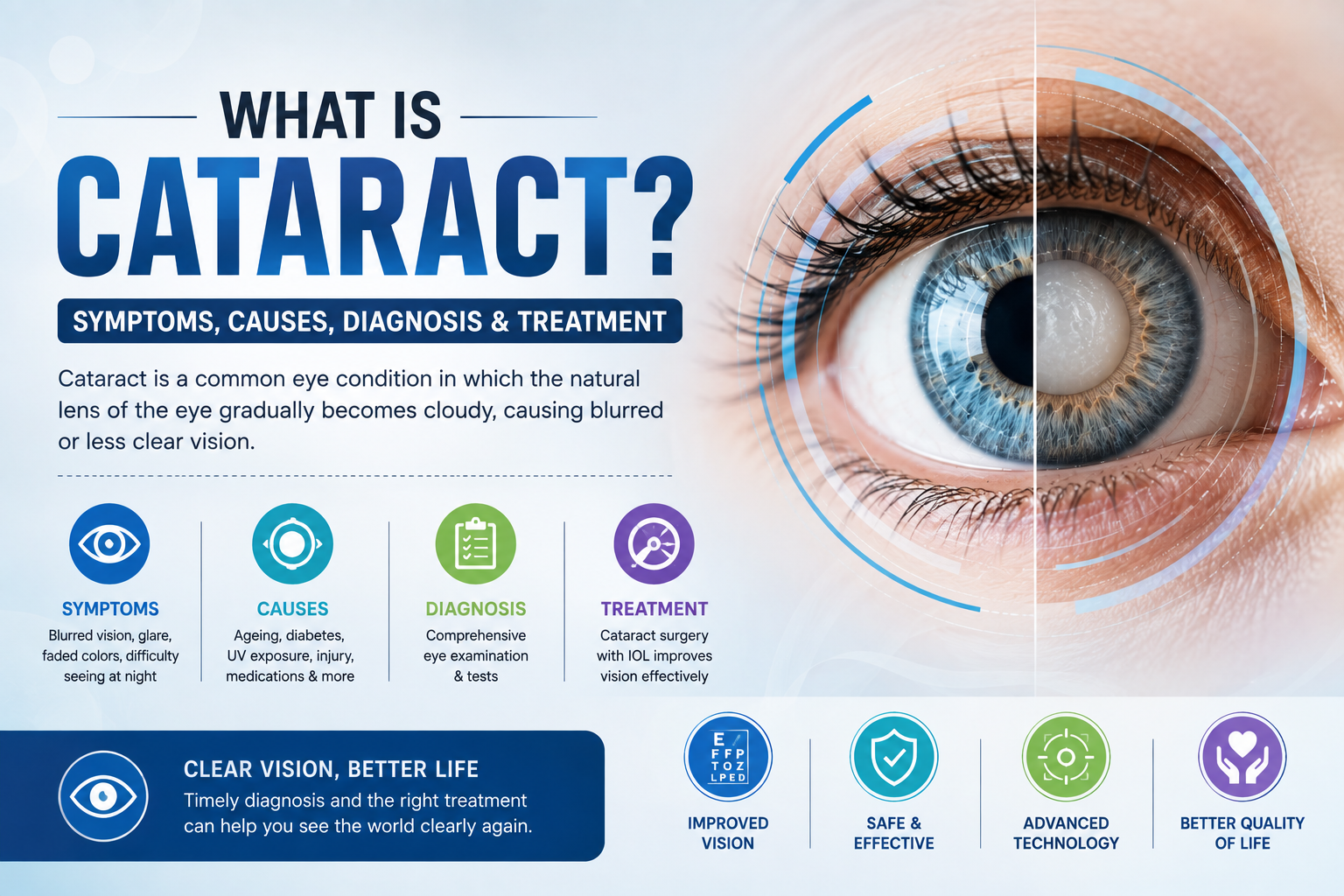
A cataract occurs when the eye’s natural lens becomes cloudy instead of remaining clear and transparent. The lens normally helps focus light onto the retina, allowing you to see clearly. As cataract develops, light may not pass through the lens as effectively, resulting in blurred, hazy, or less sharp vision.
Cataract usually develops gradually. In the beginning, changes may be mild and may not significantly affect everyday activities. As the cataract progresses, however, tasks such as reading, driving, recognising faces, or seeing in low-light conditions may become more difficult.
Common Symptoms of Cataract
Cataract symptoms often develop slowly, which means some people may not notice the changes immediately. Common symptoms include:
- Blurred or cloudy vision
- Difficulty seeing clearly at night
- Glare around lights or headlights
- Increased sensitivity to bright light
- Colours appearing faded
- Difficulty reading clearly
- Frequent changes in spectacle power
- Reduced clarity of vision despite wearing glasses
Not every change in vision is caused by cataract. Similar symptoms can occur with other eye conditions, so a comprehensive examination by an ophthalmologist is important for an accurate diagnosis.
What Causes Cataract?
Age-related changes in the natural lens are one of the most common causes of cataract. As the lens changes over time, it can gradually lose its transparency.
Other factors that may increase the risk of developing cataract include:
- Increasing age
- Diabetes
- Previous eye injury
- Previous eye surgery
- Certain long-term medications
- Prolonged exposure to ultraviolet radiation
- Smoking
- Certain medical conditions
Having one or more risk factors does not necessarily mean that cataract will develop at a particular age. An ophthalmologist can assess your individual risk based on your medical history and overall eye health.
Types of Cataract
Cataract can affect different parts of the natural lens, and its appearance and progression can vary. The main types include nuclear cataract, cortical cataract, and posterior subcapsular cataract.
- Nuclear cataract: Develops in the central part of the lens and is commonly associated with ageing.
- Cortical cataract: Affects the outer layer of the lens and may appear as wedge-shaped or spoke-like changes.
- Posterior subcapsular cataract: Develops toward the back of the lens and may affect reading vision or vision in bright light.
The symptoms and progression can differ from person to person, so an eye examination is needed to determine the type and severity of cataract.
How Is Cataract Diagnosed?
Cataract is usually diagnosed through a comprehensive eye examination. The ophthalmologist evaluates vision and examines the eye to determine whether lens clouding is present and whether another condition could be contributing to the vision changes.
Depending on the patient’s symptoms and clinical findings, additional tests may be recommended to assess the overall health of the eye and help with treatment planning.
A proper diagnosis is particularly important before Cataract Treatment in Karnal, as the appropriate treatment depends on the patient’s eye condition and visual requirements.
When Is Cataract Surgery Needed?
A cataract does not always require immediate surgery. In the early stages, changes in vision may sometimes be managed with updated spectacles and appropriate monitoring.
Surgery may be considered when cataract begins to interfere with everyday activities such as:
- Reading
- Driving
- Working
- Watching television
- Recognising faces
- Performing routine tasks
The decision should be made after consultation with an ophthalmologist. The severity of the cataract and its effect on the patient’s daily life are important considerations.
What Is Cataract Surgery?
Cataract surgery involves removing the cloudy natural lens and replacing it with an artificial intraocular lens, commonly called an IOL.
Before surgery, the ophthalmologist evaluates the eye and discusses suitable lens options based on the patient’s eye health, visual needs, and clinical findings.
The aim of cataract surgery is to improve vision affected by the cloudy lens. However, the final visual outcome can also depend on the health of other parts of the eye.
Cataract Treatment Options
The appropriate Cataract Treatment depends on the stage of the condition and how much it affects vision.
For early cataract, an ophthalmologist may recommend:
- Updated spectacles
- Better lighting for reading and close work
- Regular monitoring
- Managing relevant health conditions
When cataract significantly affects vision and daily activities, cataract surgery may be recommended.
For anyone considering Cataract Surgery in Karnal, a detailed consultation is important to understand whether surgery is appropriate and which treatment and IOL options may suit the individual eye condition.
Choosing the Best Cataract Hospital in Karnal
Choosing the Best Cataract Hospital in Karnal should involve more than comparing hospital names or online claims. Cataract treatment is an individual decision, and the right care depends on the patient’s eye health, vision requirements, and examination findings.
Before selecting a hospital, consider:
- Availability of qualified ophthalmologists
- Comprehensive cataract evaluation
- Appropriate diagnostic facilities
- Suitable cataract surgery options
- Availability of intraocular lens (IOL) options
- Patient safety and surgical protocols
- Clear explanation of the treatment process
- Proper post-operative follow-up
A detailed consultation can help patients understand whether cataract surgery is required and which treatment approach may be appropriate.
What to Expect After Cataract Surgery?
Recovery after cataract surgery varies from person to person. The ophthalmologist will provide specific instructions regarding eye drops, medicines, activity restrictions, and follow-up visits.
Patients should follow these instructions carefully and attend scheduled appointments so that the eye can be monitored during recovery.
If there is sudden vision loss, significant pain, increasing redness, swelling, or other unexpected symptoms after surgery, the patient should contact their eye-care provider promptly.
Conclusion
Cataract is a common cause of gradually reduced vision, particularly with increasing age. Recognising its symptoms and understanding the available Cataract Treatment options can help patients seek appropriate care at the right time.
If cataract is affecting reading, driving, work, or other daily activities, a comprehensive eye examination can help determine whether surgery is appropriate. Patients considering Cataract Surgery in Karnal should discuss their eye health, treatment options, IOL choices, and expected recovery with a qualified ophthalmologist.
About Arora Eye Centre
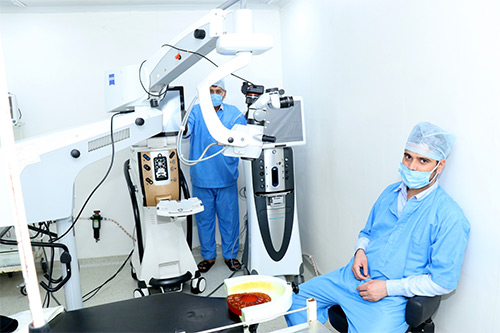
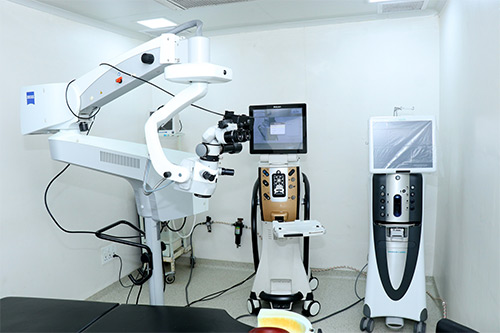
For patients considering cataract care in Karnal, choosing an eye-care centre that provides appropriate evaluation and treatment planning is important. Arora Eye Centre offers eye-care services including cataract-related care, along with other ophthalmic treatments.
Patients can undergo an eye evaluation to understand the condition of the natural lens and discuss suitable treatment options with an ophthalmologist. The recommended approach depends on the patient’s eye health, vision requirements, and clinical assessment.
For accurate information about available cataract procedures, specialists, facilities, and appointments, patients should refer to the centre’s official information or consult the ophthalmology team directly.
Book your consultation today and take the first step towards clearer vision!
📍 Address: 650, Sector 7, Urban Estate, Karnal, Haryana – 132001
📞 Phone: +91-184-4036-258 | +91-9812029328
🌐 Website: www.aroraeyecentre.in
📧 Email: info@aroraeyecentre.in
Medical Disclaimer: This article is for general informational and educational purposes only. It does not replace professional medical advice, diagnosis, or treatment. Cataract symptoms and treatment requirements can vary from person to person. Consult a qualified ophthalmologist for a comprehensive eye examination and personalised medical advice.
Frequently Asked Questions About Cataract
Can cataract be treated without surgery?
Early cataract may not require immediate surgery. Updated spectacles and regular monitoring may help manage vision for some time. However, when the cloudy lens significantly affects vision and daily activities, surgery may be recommended.
Is cataract surgery suitable for everyone?
Cataract surgery is commonly performed, but suitability depends on the patient’s overall eye health and medical condition. A complete examination is required before surgery.
How do I find a Cataract Specialist in Karnal?
Look for an ophthalmologist who provides comprehensive cataract evaluation and explains the diagnosis, treatment options, IOL choices, risks, and follow-up requirements clearly.
Does cataract always cause complete vision loss?
Cataract can progressively reduce vision, but the severity and rate of progression vary. Early evaluation can help determine the appropriate time for treatment.
When should I see an eye specialist for cataract symptoms?
If blurred or cloudy vision, glare, difficulty seeing at night, or other vision changes begin affecting your daily activities, schedule an eye examination. An ophthalmologist can determine whether cataract or another eye condition is responsible.