


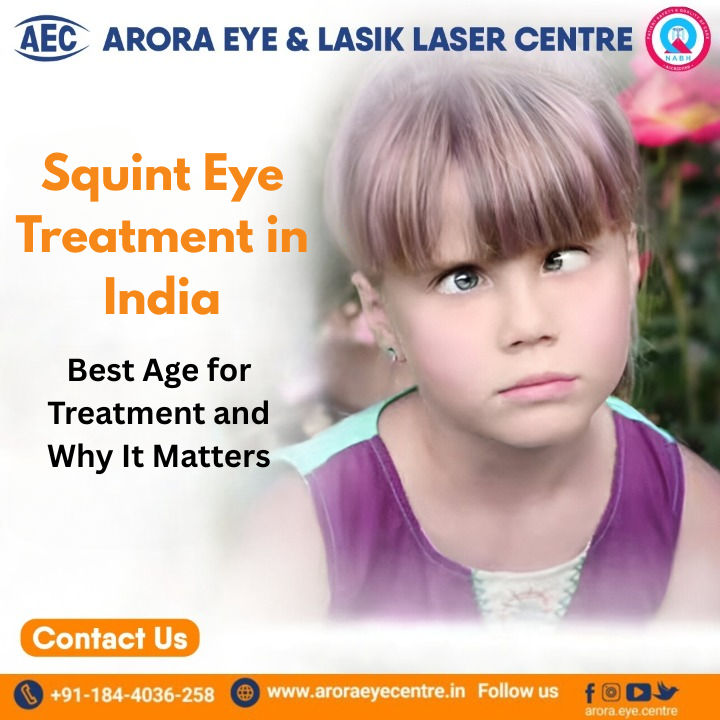
Squint, also known as strabismus, is a common eye condition where the eyes do not align in the same direction. One eye may look straight while the other may turn inward, outward, upward, or downward. Many parents notice squint in childhood, but the condition can also appear in adults due to injury, muscle weakness, or neurological issues. Today, Squint Eye Treatment in India has advanced rapidly, giving children and adults access to safe, effective, and long-lasting solutions.
This blog explains the causes of squint, the ideal age for treatment, why early care is important, available treatment options, and how modern eye hospitals are helping people restore proper eye alignment. The article also highlights how Arora Eye Centre provides trusted care along with a strong focus on quality and comfort.
What Is Squint and Why Does It Happen?
Squint occurs when the eye muscles are not functioning together. The human eye has six muscles that control eye movement. These muscles must work together to maintain focus and coordination. When these muscles face imbalance or weakness, one eye may drift away from the central visual axis.
Common causes include:
- Weak eye muscles
- Refractive errors (especially high hypermetropia)
- Nerve-related problems
- Eye injury
- Childhood developmental issues
- Genetic factors
- Cataract or other eye diseases
- Poor binocular vision
No matter the cause, Squint Eye Treatment in India offers several effective methods to correct the problem and restore normal eye alignment.
Why Treating Squint Is Important
Some people think squint is only a cosmetic issue, but that is entirely incorrect. Untreated squint can cause several vision-related problems, especially in children.
Effects of untreated squint
- Lazy eye (Amblyopia)
- Reduced depth perception
- Poor hand-eye coordination
- Double vision
- Headache or eye strain
- Low confidence and social discomfort
- Permanent loss of binocular vision
Early treatment prevents these issues and helps ensure both eyes work together properly.
Best Age for Squint Treatment and Why It Matters
Parents often ask, “What is the correct age for squint treatment?” The answer is simple: as early as possible.
For Children
Eye specialists recommend treatment before the age of 6 to achieve the best visual development. Children’s brains are still learning to use their eyes correctly. If squint is left untreated, the brain may ignore the weaker eye, leading to lazy eye.
Early Squint Eye Treatment in India helps restore normal eye function, improves appearance, and prevents long-term vision loss.
For Infants
If a baby is diagnosed with congenital squint, treatment should begin between 6 months to 1 year. Early intervention improves visual outcomes and alignment.
For Adults
Adults can also undergo treatment at any age. Modern procedures, especially Squint Surgery in Karnal, have made correction possible even for long-standing cases. Adults benefit from:
- Improved vision
- Better coordination
- Enhanced confidence
- Relief from double vision
- Cosmetic improvement
There is no upper age limit, making it easier for anyone to seek help.
Types of Squint Commonly Treated in India
- Esotropia – Eye turns inward
- Exotropia – Eye turns outward
- Hypertropia – Eye turns upward
- Hypotropia – Eye turns downward
- Paralytic squint – Due to nerve damage
- Convergent squint – Caused by focusing issues
- Divergent squint – Eyes drift outward
Each type gets a customized plan, helping patients get an effective Squint Eye Treatment in India
Treatment Options for Squint
Modern eye hospitals use advanced technology to treat squint. The choice depends on the severity, root cause, and age of the patient.
1. Glasses and Vision Correction
If refractive error is causing squint, prescription glasses can help align the eyes. Children respond well to glasses early in life.
2. Eye Exercises
Orthoptic exercises strengthen eye muscles and improve coordination. They are useful for mild squint or post-surgery recovery.
3. Patching Therapy
When a lazy eye develops, doctors cover the stronger eye with a patch. This strengthens the weaker eye and improves brain stimulation.
4. Prisms
Prism lenses help manage double vision and reduce eye strain. Adults with nerve-related squint often benefit from prism correction.
5. Botox Injection
Botox relaxes tight eye muscles, allowing the eyes to realign. This is a temporary but effective method for selected patients.
6. Squint Surgery
Squint surgery is the most successful method for long-term correction. It adjusts the muscle length and positioning, helping restore balance.
Many patients choose Squint Surgery in Karnal because the city has experienced specialists and modern eye facilities offering safe and precise surgical care.
How Squint Surgery Enhances Eye Coordination
Squint surgery does much more than improve appearance. It also enhances:
- Binocular vision
- Eye alignment
- Brain–eye coordination
- Depth perception
- Hand-eye synchronization
When both eyes start working together, the brain receives clear and balanced images. This improves daily activities such as reading, sports, driving, and overall comfort.
This is why Squint Surgery Enhances Eye Coordination, making it not just a cosmetic treatment but an essential medical procedure.
Why Choose Arora Eye Centre?
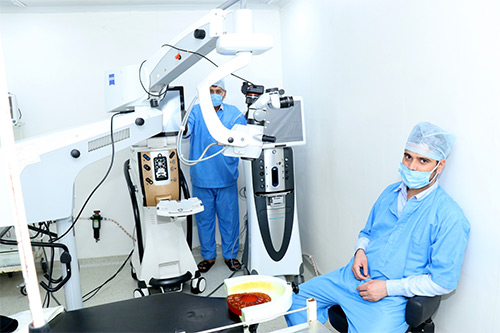
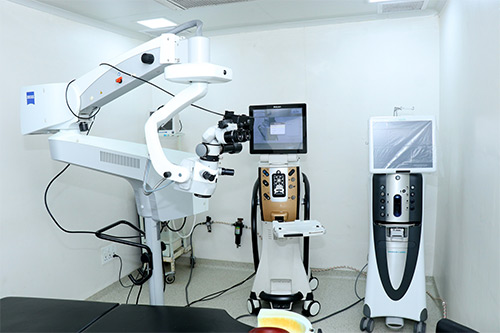
Arora Eye Centre offers modern and trustworthy care for patients seeking Squint Eye Treatment in India. The hospital uses advanced diagnostic tools, updated surgical systems, and patient-friendly procedures to ensure positive outcomes.
The team also includes highly trained specialists, making it a preferred choice for families looking for expert care in the region. People who search for a Best Eye Doctor in Karnal often prefer institutions that maintain hygiene, quality, and ethical practices—qualities that Arora Eye Centre consistently upholds.
Steps Involved in a Squint Evaluation
A complete squint evaluation includes:
- Detailed eye examination
- Vision testing
- Eye movement assessment
- Depth perception test
- Refraction test
- Muscle strength evaluation
- Retinal check-up
- Prism measurement
These steps help the specialist plan a tailored treatment strategy.
Life After Treatment
After proper care or surgery:
- Eyes appear naturally aligned
- Confidence improves
- Double vision decreases
- Visual comfort increases
- Daily tasks become easier
- Children perform better in school
Early or timely intervention creates long-lasting benefits.
Frequently Asked Questions
1. What is the best age for squint treatment?
The best age is before six years, but treatment can be done at any age.
2. Is squint only a cosmetic problem?
No. It affects vision, depth perception, and eye coordination.
3. Can adults undergo squint surgery?
Yes. Adults can get successful corrections with modern methods.
4. Is squint surgery safe?
Modern surgical techniques are safe, minimally invasive, and effective.
5. Do glasses help in correcting squint?
Yes, for many children, glasses alone can correct eye alignment.
6. How long does squint surgery take?
Usually 30–60 minutes depending on the complexity.
7. Can squint return after treatment?
In rare cases, it may return, but follow-up care helps prevent recurrence.
8. Does squint affect school performance in children?
Yes. It can affect reading, writing, and visual learning. Early treatment helps.
Conclusion
Squint is a common but treatable eye condition. Whether it appears in childhood or adulthood, timely care ensures better vision and improved eye coordination. Early intervention prevents complications like lazy eye and supports healthy visual development. Squint Eye Treatment in India has advanced significantly, offering families safe, reliable, and effective solutions.
If you are looking for the right place for treatment of Squint Surgery in Karnal, you can trust centres that offer advanced diagnosis, modern equipment, and skilled specialists. Hospitals like Arora Eye Centre provide comprehensive care, personalized treatment plans, and expert guidance to help patients achieve natural eye alignment and better visual comfort.
With proper treatment, consistent follow-up, and clear guidance from experienced professionals, patients of all ages can enjoy improved vision and enhanced quality of life.