


Cataract surgery has transformed significantly over the last two decades, becoming safer, faster, and more precise than ever before. Among patients researching treatment options at Arora Eye Centre, one comparison consistently stands out: Phaco vs Laser Cataract Surgery. Both procedures are modern, effective, and widely practiced—but many patients want a clear answer to one critical question: Which option is safer?
This guide provides an evidence-based cataract surgery safety comparison, helping you understand how phacoemulsification and laser-assisted cataract surgery differ in terms of safety, accuracy, cost, and outcomes—so you can make an informed decision with confidence under the guidance of experienced specialists at Arora Eye Centre.
What Is Cataract Surgery and Why Is It Needed?
A cataract develops when the eye’s natural lens becomes cloudy, leading to:
- Blurred or dim vision
- Increased glare from lights
- Poor night vision
- Difficulty reading or driving
Once cataracts begin affecting daily life, surgery is the only effective treatment.
Modern cataract surgery involves:
- Removing the cloudy natural lens
- Replacing it with an artificial intraocular lens (IOL)
Today, the two most commonly used techniques at Arora Eye Centre are Phacoemulsification (Phaco) and Laser-Assisted Cataract Surgery (LACS).
What Is Phacoemulsification Cataract Surgery?
Phacoemulsification is the most widely performed cataract surgery worldwide and is often considered the benchmark against which other techniques are compared.
How Does Phaco Surgery Work?
- A tiny incision (2–2.8 mm) is made manually
- Ultrasound energy breaks the cataract into small fragments
- The fragments are gently suctioned out
- An intraocular lens is implanted
Why Is Phaco Considered Safe?
- Over 95% success rate globally
- Minimal incision promotes faster healing
- Backed by decades of clinical data
- Performed routinely by trained cataract surgeons at Arora Eye Centre
For most patients, phaco remains the best cataract surgery method due to its reliability, affordability, and proven long-term outcomes.
What Is Laser-Assisted (Blade-Free) Cataract Surgery?
Laser-assisted cataract surgery—often referred to as femto cataract surgery or blade-free cataract surgery—uses a femtosecond laser to perform select steps of the procedure.
How Does Laser Cataract Surgery Work?
The laser is used to:
- Create highly precise corneal incisions
- Open the lens capsule with computer-guided accuracy
- Pre-soften the cataract for easier removal
The remaining steps are completed using phacoemulsification by expert surgeons at Arora Eye Centre.
Key Advantages of Laser Cataract Surgery
- Enhanced precision and consistency
- Reduced ultrasound energy usage
- Better control in complex eye conditions
- Improved alignment for premium IOLs
For patients comparing blade-free cataract surgery vs phaco, laser technology is often preferred when advanced customization is required.
Phaco vs Laser Cataract Surgery: Which Is Safer?
Short Answer
Both procedures are extremely safe when performed by experienced ophthalmologists in accredited hospitals like Arora Eye Centre.
Safety depends more on:
- Surgeon expertise
- Patient eye condition
- Quality of pre-surgery evaluation
Cataract Surgery Safety Comparison
| Safety Factor | Phaco Surgery | Laser Cataract Surgery |
| Incision Accuracy | Surgeon-controlled | Laser-guided |
| Tissue Trauma Risk | Very low | Even lower |
| Complication Rate | <2% | <1.5% |
| Ultrasound Energy | Moderate | Reduced |
| Complex Case Handling | Good | Excellent |
Expert Insight:
“According to experienced cataract surgeons at Arora Eye Centre, outcomes depend more on surgical expertise than on whether phaco or laser technology is used.”
Are There Any Laser Cataract Surgery Risks?
While laser-assisted surgery is safe, patients should be aware of certain considerations:
- Slightly higher cost
- Not suitable for every eye anatomy
- Requires precise patient positioning
Overall, laser cataract surgery risks are minimal and comparable to phaco surgery when performed by trained specialists after proper evaluation at Arora Eye Centre.
Which Cataract Surgery Is Better for You?
Phaco Surgery May Be Best If:
- You want a cost-effective solution
- Your cataract is straightforward
- You prefer a time-tested approach
- You have no significant corneal issues
Laser Cataract Surgery May Be Best If:
- You want maximum surgical precision
- You are opting for multifocal or toric IOLs
- You have astigmatism
- You prefer blade-free technology
Your eye surgeon at Arora Eye Centre will recommend the safest option after assessing your cornea, lens density, and visual goals.
How Long Is Recovery After Cataract Surgery?
Recovery Timeline (Both Procedures)
- Day 1: Noticeable improvement in vision
- 1 Week: Resume most daily activities
- 3–4 Weeks: Complete healing
Laser-assisted surgery may result in slightly reduced inflammation and faster visual stabilization in some cases. Long-term visual outcomes are excellent with both techniques when performed at Arora Eye Centre.
Expert Opinions & Medical Standards
Leading ophthalmologists agree:
- Phacoemulsification remains the global standard
- Laser technology enhances precision—not safety alone
- Surgeon experience is the most critical factor
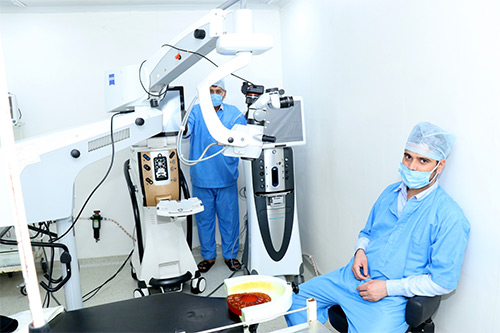
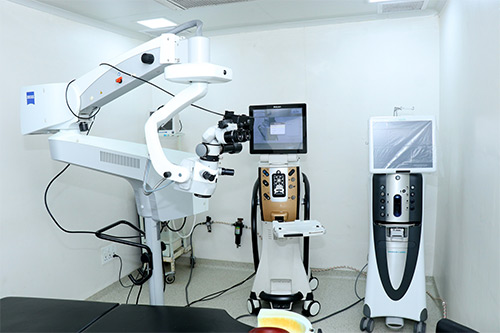
Hospitals like Arora Eye Centre, following NABH-aligned safety protocols, ensure advanced diagnostics, sterile surgical environments, and patient-centric care.
Conclusion
When evaluating Phaco vs Laser Cataract Surgery, the conclusion is reassuring: both procedures are safe, effective, and highly successful. Phaco surgery offers proven reliability and affordability, while laser cataract surgery provides enhanced precision and customization for selected patients.
The safest choice depends on your eye health, visual expectations, and your surgeon’s recommendation at Arora Eye Centre—not just the technology used.
👉 Consult the specialists at Arora Eye Centre to determine the best cataract surgery option for you and take the first step toward clearer, safer vision.